
Ancient woodlands in Central Bedfordshire under less threat from housing targets than elsewhere, says council
Evidence suggests ancient woodlands in Central Bedfordshire are facing fewer pressures than some of England’s oldest habitats in other parts of the country, according to the council.
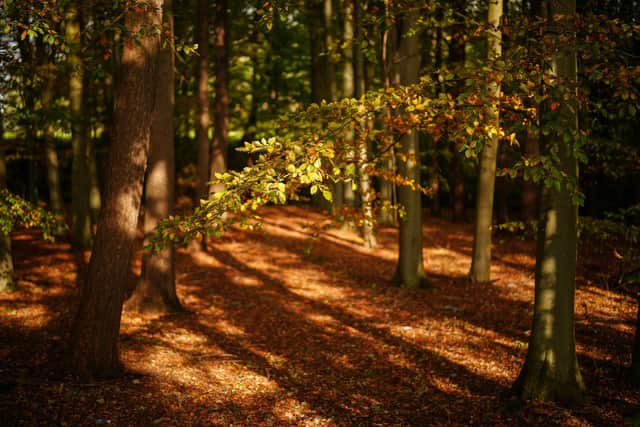
These woodland areas cover 16,429,527sqm in Central Beds or 2.3 per cent of the council area, based on research for a BBC shared data unit investigation.

Similar habitats total 10,651,263sqm in Bedford borough or 2.2 per cent of the local authority area, and just 194,321sqm or 0.40 per cent in Luton borough.
Ancient woodland campaigners fear a government drive to build more houses could put such areas under increasing pressure, despite planning guideline protections designed to prevent their loss.
These ecological sites are supposed to receive some of the strongest environment defences in the planning system. But the in-depth investigation has found housing developments continue to be proposed and approved immediately beside dozens of the country’s oldest forests.
This is prompting concerns that national planning policy is failing. CBC approved plans for 54 homes on a greenfield site between Linslade Reservoir and 138 Soulbury Road, close to Linslade Wood, in January.
“Time will tell” whether the housing scheme “has a negative impact” on the nearby woodland, a local councillor warned at the time.
A Central Bedfordshire Council spokesman said: “We’re not currently aware of evidence that ancient woodlands in Central Bedfordshire are facing unique pressures compared with elsewhere in the country.
“But we recognise the concerns raised nationally, and continue to apply local and national planning policies designed to protect these important habitats when considering development proposals.”
A Bedford Borough Council spokesman said the authority always works with Natural England around such issues.
Lucy Graebe-Watson, of Ancient Woodland UK, explained these sites are “irreplaceable”, adding: “We’re seeing cases already where the current protections are struggling.”
The government’s pledge to build 1.5m new homes by the end of 2029 and the recent creation of the ‘grey belt’, areas of poorer quality open spaces that can be built on, are leaving ancient woodlands at threat, campaigners warn.
Developers proposals in many cases may not involve building inside the woodland itself. Instead, the controversy centres on development immediately next to ancient woodland boundaries.
One of the main concerns raised by conservation groups is that national planning policy fails to automatically prohibit development on land surrounding ancient woodland.
Natural England advises local authorities to maintain a buffer of at least 15 metres between development and ancient woodland, Campaigners argue this can be insufficient to protect root systems, hydrology and wildlife habitats.
The national planning policy framework states development resulting in the loss or deterioration of irreplaceable habitats, including ancient woodland, should be refused unless there are “wholly exceptional reasons”.
Conservation organisations say the phrase has become one of the most contentious aspects of woodland protection, with head of nature policy at the RSPB Carl Bunnage describing the provision as “a potential loophole for developers”, particularly in areas facing pressure to meet housing targets.
Ecologists and campaign groups also point to the creation of the ‘grey belt’ as a significant change, as this policy allows development on lower-quality areas of the greenbelt under certain circumstances.
Ancient Woodland UK added that some sites next to woodland that benefited from wider green belt protections previously could now become more attractive to developers.