
Report calls for switch to two-tier education system in Central Bedfordshire
A cumulative schools deficit of about £4 million is forecast in Central Bedfordshire in the current academic year, a new report is warning.
This could rise to £16m within three years if no action is taken to transform the local education landscape, it adds.
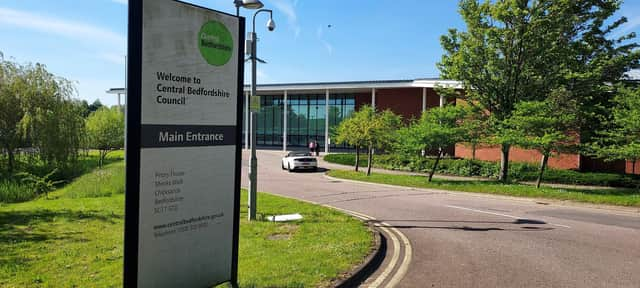

A desire to improve school outcomes is behind a renewed push by Central Bedfordshire Council to convert from a three-tier to a two-tier education system locally.
A mixed education system operates within the district currently, according to a report to the local authority’s children’s services overview and scrutiny committee.
This creates inconsistency in the educational experience of children and young people across the district, said the report.
“A programme of talks with trusts and schools is ongoing to agree plans for the eight school place areas within Central Bedfordshire,” it writes.
“While there are many strengths within individual schools, the structure of the system is increasingly acting as a barrier to improving outcomes. Children in a three-tier arrangement experience more transitions between schools.
“These moves can disrupt learning, pastoral continuity and curriculum progression. Local performance data shows attainment remains below national averages particularly at key stages two and four.
“This disadvantage gap is wider than elsewhere. The move to a two-tier system is therefore an educational improvement strategy.
“A primary and secondary model supports longer phases of learning, allowing schools to build deeper knowledge, stronger relationships, and more consistent approaches to teaching and support.
“This is particularly important for vulnerable learners, including those with special educational needs and disabilities (SEND) and those from disadvantaged backgrounds disproportionately affected by such changes.”
A two-tier system enables clearer accountability for outcomes and stronger alignment of curriculum from early years through to key stage four, explained the report.
“The authority is experiencing a sustained predicted decline in pupil numbers, with forecasts showing a reduction in the overall school population during the next five years.
“This is set against a system that already has significant spare capacity, resulting in high levels of surplus places across multiple planning areas.
“Current data shows surplus capacity across Harlington, Leighton-Linslade, Shefford and Stotfold, and Redbourn. This level of surplus isn’t sustainable within a funding system which allocates resources on a per-pupil basis.
“Where schools operate significantly below capacity, they’re unable to reduce costs proportionately. Fixed expenditure, such as staffing, buildings and utilities, remains largely unchanged.
“This leads to increasing financial pressure and a growing number of schools entering deficit positions. The authority is forecasting a cumulative deficit of about £4m in the current year, rising to £16m within three years if no action is taken.
“That presents a significant financial risk to schools, the local authority, and ultimately to the education of children and young people.”
The Dunstable and Houghton Regis school place planning area transitioned to a two-tier education system in 2014, the Sandy cluster in 2018, and parts of Shefford and Stotfold in 2021, added the report.
“The Biggleswade cluster became primary and secondary in 2024, and Cranfield is due to change in September.
“Workshops were held last September with the main purpose of hearing from schools and trusts on what they consider priorities for a transition and any potential hurdles. That information has been central to the subsequent modelling.
“It was clear that schools and trusts have a desire to move to a two-tier system, which will only be achieved if all decision-making organisations can agree.”
The report is due to be considered by Central Bedfordshire Council’s children’s services overview and scrutiny committee on April 21.