
Anglian Water raises concerns over future of development as Biggleswade sewerage works 'at capacity'
Concerns have been raised over the future of development in the Biggleswade area – as Anglian Water reveals its Biggleswade wastewater treatment plant can’t cope with more houses.
The company recently objected to plans for up to 25 homes on land east of Harvey Close, Upper Caldecote.
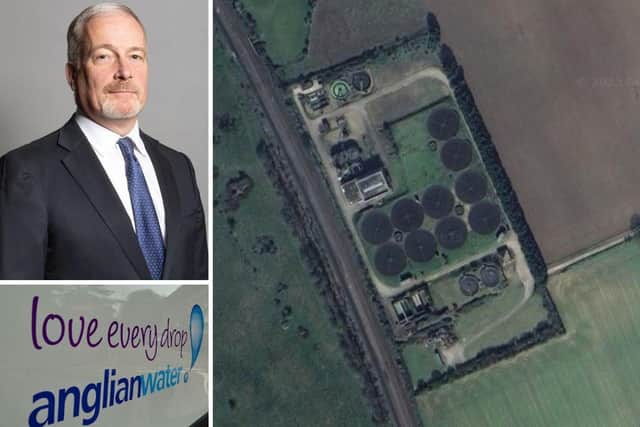

In its objection, it reveals that Biggleswade Water Recycling Centre (WRC) is at capacity and says the site is “unsustainable due to the associated environmental risk and increased discharged rates, which could lead to a deterioration in water quality and unacceptable risk of breaching environmental legislation at Biggleswade WRC."
It adds that no funding has been allocated for the WRC – which primarily serves Biggleswade, Northill and Upper Caldecote, among some neighbouring villages to the north of the county – until at least 2030.
The company had also objected to a development in Northill in December – but withdrew its objection after deciding it was unlikely it would create any additional foul flows.
But while it can voice its objections, the law in England means it cannot refuse connections to its sewer networks – and once a development has planning permission, developers have an automatic right to connect to it.
Ultimately, the power to accept or reject its recommendations lies with the council.
Elsewhere in the country, water and sewerage capacity is taken into account alongside other planning considerations.
An Anglian Water spokesperson said: “Our region is one of the fastest-growing in the country, with 720,000 new residents expected by 2043.
“As a water company, we are not a statutory consultee in the planning application process. Therefore we don’t have powers to prevent connections from new housing.
"However, in order to ensure we’re protecting the environment, we do need to take into account the capacity we have available in growing areas. In locations where additional homes would exceed existing capacity and be a risk to the environment, we may object or request that the local authority put a condition on the planning application to give us time to complete upgrades.
“We’re spending £280m in the next five years to upgrade our wastewater treatment capacity, but at some locations we’re at or beyond our water treatment capacity, which it’s why it’s vital for us to work with developers and local authorities at an early stage in their thinking, to make sure we have the time to invest and ensure our infrastructure is ready to support the region.
“We feel that the environmentally responsible thing for us to do is to highlight where development poses such a risk to the environment. We do have capacity to accommodate growth within our region and we are working with local planning authorities to identify the most sustainable locations for growth.”
North Bedfordshire MP Richard Fuller believes water companies should be statutory consultees – giving their objections more weight.
He said: “It is good to see Anglian Water company take a proactive stance to protect existing sewage systems from any potential excess pressure caused by large-scale housing developments.
“Although all new developments do separate out sewage from rainwater and are often very efficient in their use of water, they inevitably add to the total amount of sewage in the system.
“I have supported water companies becoming statutory consultees on large developments, so these considerations are given more weight in planning decisions. I also want developers to make a bigger financial contribution to protecting our sewage systems as currently it is only the marginal impact that is taken into consideration.
“We face a wide range of issues with water management in Bedfordshire which is one reason I pushed for the establishment of the North Bedfordshire Water Management Alliance to bring all agencies together to deal more effectively with flooding and its consequences and with improving the quality of water in our rivers.”
Anglian Water is funded by Ofwat through the Price Review process to account for growth, but says successive price reviews have underfunded the industry so not everywhere has capacity for growth.
According to the company, the updated housing figures in the National Planning Policy Framework have resulted in an uplift of around 75,000 homes across the region by 2030, for which no funding has been provided.
A Central Bedfordshire Council spokesperson said: “Through the planning application process, we welcome all comments and feedback on proposed developments and how they may impact the local area. All submissions are reviewed as part of the decision-making process and in terms of any supporting infrastructure this is fully considered before a decision is made. We encourage all developers to work with Anglian Water, and others, to understand the impact of developments and to find possible solutions together.”