
Central Beds Council backs Bill calling for stronger rules over building on flood plains
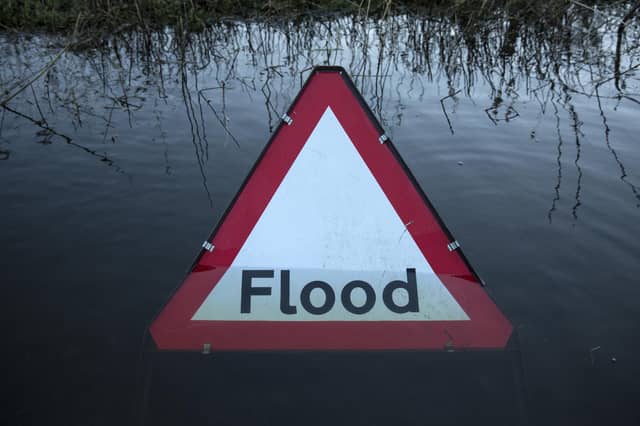

Housing or commercial development in Central Bedfordshire which increases the flood risk for residents in towns and villages should be refused, a meeting heard.
In Bedfordshire, 11,700 properties are now classed as being within flood zones two or three after the publication of updated flood plains data.
That represents 4.3 per cent of houses in our county, according to a motion to a Central Bedfordshire Council meeting.
The motion suggested internal drainage boards “can provide more expertise on flooding risk if they’re made statutory consultees in the planning process, that developers should be required to deliver and maintain sustainable drainage infrastructure at a standard eliminating flood risk, and that development increasing flood risk for residents should be rejected”.
Presenting the motion, Conservative Heath and Reach councillor Mark Versallion explained: “The current planning system is inefficient to tackle flooding risk.
“Internal drainage boards should be made statutory to give their views greater weight. Developers should be required to make the standards of eliminating flood risk better.
“If developments threaten to increase flood risk for current residents, those applications should be refused.”
Conservative Mid Bedfordshire MP and Mepperhall and Shillington councillor Blake Stephenson has tabled a Private Members’ Bill at the House of Commons because “the government’s Planning and Infrastructure Act doesn’t go far enough” and the Bill is due for a second reading in May.
The Bill would give councils powers to reject future planning applications from developers if they have previously failed to deliver or maintain sustainable drainage systems (SuDS), and require the Secretary of State to publish statutory guidance on the minimum expected standards for SuDS.
It would also ensure a presumption against development where the lead local flood authority, Environment Agency (EA), or the IDB considers that development would increase flood risk for existing properties.
Speaking about the Bill when he introduced it last year, Mr Stephenson said: "Since the devastating flooding in Mid Bedfordshire last September I've been listening to local people, speaking to our local authorities and scrutinising Government plans, and it’s alarmingly clear that more needs to be done.
“That’s why I have brought my own Bill to Parliament to help fix some of the gaps in the system.
“I know it won’t fix every problem and there will be still much to do, but this will address important issues within the planning system on flood risk and sustainable drainage and I hope it will continue to have the backing of other MPs.”
Council leader and Independent Potton councillor Adam Zerny replied: “I’m supportive to the objectives here and of councillor Stephenson’s Bill.
“Everything we can do to draw attention to support this issue in Parliament, around a key issue to residents and those moving here in the future, is vitally important.”
The motion called on CBC to make a public statement of support for the Planning (Flooding) Bill, and for councillor Zerny to write to the Secretary of State for Housing, Communities and Local Government asking for Government support for the aims of the Bill.
Liberal Democrat Leighton Linslade South councillor Chris Leaman said: “Luckily we’ve not had more severe flooding of late, but there are many residents enduring the effects of flooding even from 18 months ago.
“Some people have only just moved back into their homes recently. These impacts last much longer than the flooding itself. with climate change making these events unpredictable and more likely to occur.
“We could have a greater number of our residents suffering through this sadly, so this is a timely motion.”
Independent Leighton Linslade West councillor Victoria Harvey agreed internal drainage boards could play a more prominent role, as they can be unaware of planning applications.
“With surface water flooding and maintaining waterways and outflows, we’re suffering under privatisation of the water companies, while the Environment Agency is underfunded so plenty of things don’t happen,” she added.
Green Party (the Central Bedfordshire Community Network) councillor Susan Clinch referred to “encountering the frustration of our flood risk officers who have to accept developer assurances they’re going to maintain the sustainable drainage systems and these schemes will work”.
Councillors unanimously approved the motion, noting the council cannot resolve to overturn higher (Parliamentary) legislation.