
Education in Central Bedfordshire 'in crisis' warns councillor
Education in Central Bedfordshire is ‘in crisis’ a councillor has warned.
And Central Bedfordshire has 8,000 surplus school places currently, which is forecast to rise beyond 10,000, a meeting heard.
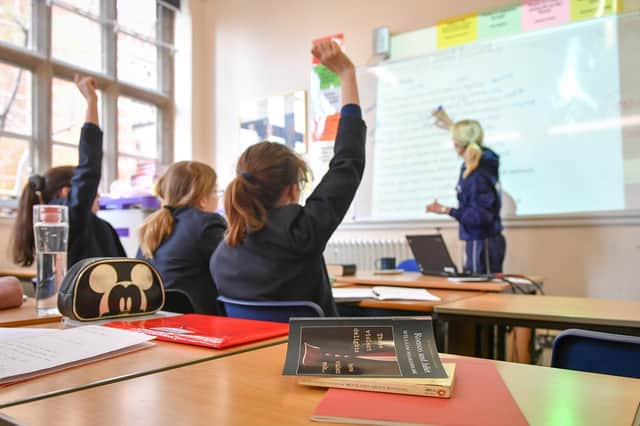

At least 25 schools are projected to be in deficit for the 2026/2027 financial year, with excess capacity a factor, according to a motion to Central Bedfordshire Council.
“The education of our children and young people finds itself in crisis,” warned the motion from the Central Bedfordshire Community Network Biggleswade West councillor Hayley Whitaker.
She called on the local authority to agree “a combination of national and local issues has caused an education emergency within Central Bedfordshire” and urged CBC’s leader and the portfolio holder to work more closely with educational leaders and our children and young people to address the crisis”.
Councillor Whitaker said: “One of the key things is the number of our schools which are in deficit, which is rising year-on-year.
“This year we’ve seen a significant jump, mostly because of the number of spare school places caused by a drop in children on roll and because we’re creating extra capacity at the same time for future need with housing growth.
“We’re consistently in the lowest quartile for school performance and that shows no sign of improving. That’s something we can’t leave unchallenged.
“There’s also the special educational needs and disabilities (SEND) White Paper, which is designed with two-tier education in mind when many of our schools are still in a three-tier system.
“We need to prioritise how we’re going to address this crisis in our education system as a whole council.”
Executive member for children and families and Independent Flitwick councillor Gareth Mackey replied: “We all recognise we’ve a very serious situation around education and we have some significant challenges.
“This council recognises that falling rolls, school deficits, attainment issues and SEND reform are all system-wide problems and not isolated to individual schools. There are plans in place to address these.
“On working closer with educational leaders, that’s happening already and will continue. Officers meet regularly with headteachers, governing bodies, academy trusts and partners. Consultation work with children, young people and families is embedded within SEND and inclusion work.
“Work is progressing on school place planning and surplus capacity, financial recovery and support for schools in deficit, school improvement, and SEND reform delivered through partnership working.”
Liberal Democrat Leighton Linslade South councillor Shaun Roberts suggested: “Some of the language in this motion is unhelpful and could risk harming confidence among some of our parents.
“There are many good schools in Central Bedfordshire and fantastic teachers doing their utmost to give our children the best possible education.
“But we fully recognise the need for action to raise educational attainment, which is particularly acute for our most deprived children.
“We’re really concerned about the recent revelation of 8,000 empty school places. How has this come about and why’s it not been raised before? This council needs a fresh approach and the motion points towards that.”
Independent Aspley and Woburn councillor John Baker explained: “I don’t like the word crisis in the first sentence, as I think it’s quite bitter.
“The suggestion was made that the 8,000 surplus of places crept up on us. It was announced late last year. Given that figure, who’s going to support some school closures? That number of spare places means very difficult decisions at some point.”
The motion was backed by 42 councillors, with none voting against.