
Is buyer confidence returning to the Biggleswade housing market?


Signs of renewed optimism are emerging in the Biggleswade property market as analysts predict a slow but steady improvement for the UK housing sector heading into 2026 - despite several years of economic uncertainty.
Signs of renewed optimism are emerging in the Biggleswade property market as analysts predict a slow but steady improvement for the UK housing sector heading into 2026 - despite several years of economic uncertainty.
House prices in Biggleswade have dipped by around 2% over the past 12 months, broadly in line with the national picture. But new forecasts suggest that the tide may be turning, with experts expecting modest growth next year and stronger rises from 2027 onwards.
Local estate agents are already seeing early signs of increased enquiries compared with this time last year, driven by falling borrowing costs and a growing number of buyers returning to the market.
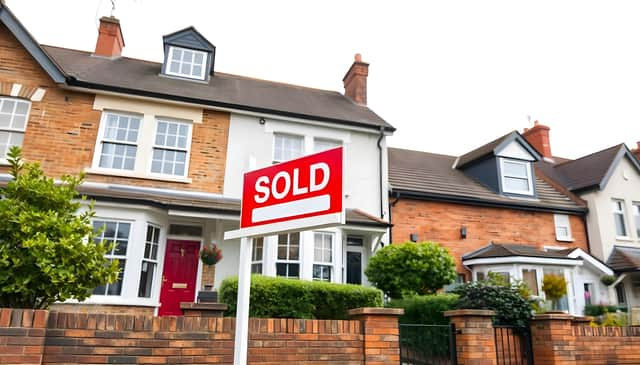
Lower mortgage rates boosting confidence
One of the biggest shifts in recent months has been the return of more competitive mortgage deals. With inflation easing, lenders have begun to cut the cost of borrowing, with some two- and five-year fixed-rate products now dipping below 3.6%.
This is welcome news for Biggleswade buyers - particularly first-time purchasers and London commuters who have been waiting for rates to stabilise before making a move.
Property forecaster Savills expects house prices to rise by around 2% nationally in 2026, with the East of England predicted to outperform slightly at around 3%. Estate agents Yopa say even this steady, modest growth could be enough to “unlock” demand from buyers who have held off during the more turbulent years.
Biggleswade’s commuter appeal remains a major draw
Despite price fluctuations, Biggleswade continues to attract buyers relocating from London and the pricier Home Counties. The speedy train journey to London King’s Cross (which can be completed in less than 40 minutes) remains a key selling point, along with the town’s relative affordability and family-friendly developments.
Local agents say this pool of buyers has helped the market remain more resilient than some other parts of the UK, even during the recent slowdown.
New developments bringing more choice
Housing availability is another factor set to shape the town’s future market. A major new village planned east of Baden Powell Way - which will eventually deliver around 1,500 new homes - is expected to expand options for buyers looking for modern properties to suit a range of budgets.
Further proposed developments from Taylor Wimpey, Redrow and Bloor Homes could also add momentum to buyer interest across the town.
Developers say that demand for new-build homes has remained relatively steady, particularly among families and young professionals, due to energy-efficient design and the ability to purchase through schemes such as shared ownership.
A more ‘balanced’ market for 2026
Nationwide, the number of homes for sale is currently at a 10-year high, according to Rightmove - creating conditions that favour buyers rather than sellers unlike the price boom of the post-covid era.
Locally, this means that homeowners hoping to sell in 2026 may need to be realistic with their asking price and ensure properties are competitively listed if they want to secure a speedy sale.
However, for first-time buyers or those looking to move up the ladder, conditions could be very promising. With the average Biggleswade home selling for around £347,000 over the past year, the town remains significantly more affordable than nearby commuter hotspots such as Knebworth and Welwyn Garden City, where average property prices are at least £100,000 more.
Looking ahead
While the double-digit price surges seen after the pandemic are unlikely to return, Biggleswade appears positioned for a steadier, more sustainable period of growth.
Falling borrowing costs, strong commuter demand and major housing investment all point towards a stabilising market in 2026 - giving potential buyers and sellers reason to feel cautiously optimistic.