
Next generation of new towns, including Tempsford, could fail without clear leadership, says House of Lords
The House of Lord has issued a statement saying the new towns planned for Tempsford and elsewhere could fail with clear leadership and locally-rooted delivery.
The House of Lords Built Environment Committee published ‘New Towns: Creating Communities’, the second report of the committee’s inquiry into the Government’s new towns programme.
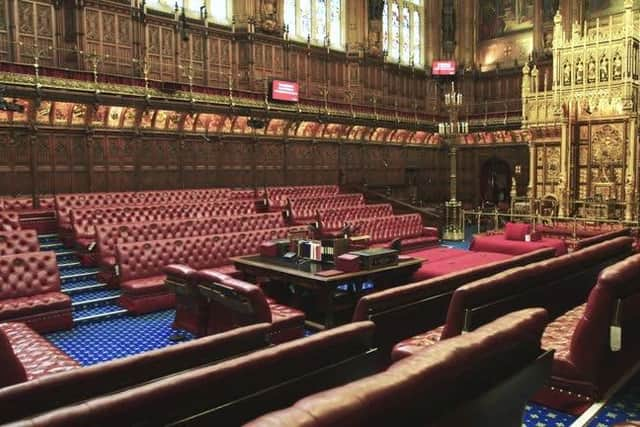

In its report, the committee repeats its calls for the establishment of a single, autonomous central body, reporting to a dedicated Cabinet-level minister, to coordinate departments, steward quality and manage new town assets over the long term.
Tempsford is one of seven locations earmarked for an official New Town — a plan that could impose up to 40,000 additional homes on the town.
Central Bedfordshire Council leader Adam Zerny has expressed concerns that “the impact zone now covers a much bigger area, taking in Everton, Little Gransden, Potton, Sandy and Sutton”.
He added: “It’s not just the 40,000 houses proposed around Tempsford, but the potential future growth (eastwards) of Milton Keynes that could affect areas of Central Bedfordshire.
“We know the government is keen to create new towns. But development on this scale must come with the right infrastructure, good schools, hospitals, transport links and well-designed housing in the right locations.”
Meanwhile, North Bedfordshire MP Richard Fuller said: “I have met residents many times over the years as they gradually became aware that some development was being considered, but many will be taken aback by the sheer size of what is now proposed. It is vital that the Government brings local people with them. They know the area intimately and understand the significant challenges involved. Their views must not be pushed aside.
“The Government’s announcement was accompanied by a Strategic Environmental Assessment (SEA), which evaluated eleven criteria for each new town location in the short, medium and long term. Despite Tempsford being the largest and most favoured site, six of the eleven criteria were judged to have a significant negative effect in the long term - more than any of the other proposed locations. Given this, and the scale of the proposal, it is one of the key issues I will be raising with the Housing Minister when we meet later this month.”
Now the House of Lords committee is urging the Government to set out and champion a “clear, galvanising vision”, rooted in opportunity and quality of life, so the programme can sustain public, political and investor support over the decades to come.
One of the report’s conclusions is that new towns should drive inclusive growth, reduce spatial inequalities and act as exemplars of modern, healthy, sustainable living. The continued emphasis on delivering housing units is not enough to give the programme meaning and create thriving and successful communities.
In addition to prioritising walkable neighbourhoods, high-quality public spaces, and biodiversity, the new towns should incorporate diverse plot sizes and reuse existing structures as much as possible, drawing on the local landscape and heritage to create distinct identities.
Lord Gascoigne, Chair of the Built Environment Committee, said: “The new towns programme needs a compelling national vision. There has to be strong national leadership, clear coordination across government, all supporting delivery on the ground at the local level to create sustainable, flourishing communities for the decades ahead.
“The purpose of the new towns programme must go beyond just meeting housing numbers. People need to be able to thrive, rather than simply survive, in these new towns; that means that these new towns have to be accessible, age-friendly and safe.”
Other findings and recommendations include embedding opportunities for active travel, green/blue infrastructure and social spaces that support physical and mental wellbeing. The towns should also embed the principles of the NHS 10‑Year Health Plan, says the report.
There must be adequate funding up-front for social, health, and green infrastructure (including temporary, flexible community spaces).
The report states: “Engagement needs to start even before any sites are formally designated and it must empower communities, especially young people, to make an active contribution to the planning process.”
It concludes: “Delivering any new towns at all while local planning capacity is so constrained will be an enormous challenge; delivering high quality, sustainable, and thriving communities of the kind the committee calls for in this report will be almost impossible under such constraints.”
You can take part in the consultation here.