
Return to school – let’s use education to address crime and its causes
Monthly column by John Tizard, Beds Police & Crime Commissioner
As the summer holidays end and schools return, children and students will be focused on learning and their academic futures. However, school is about more than academic study important as this is. Schools provide safe spaces, social and citizenship development, pastoral support and advice.
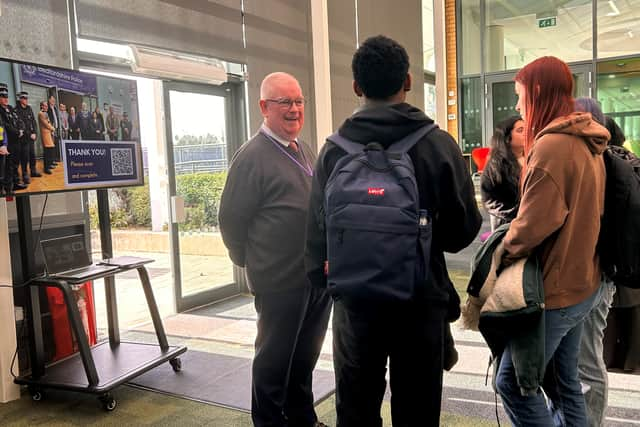

Schools do incredible work, which benefits not only their pupils but wider society.
Teachers and school staff play a vital role in the personal as well as the academic growth of their pupils. We owe them a big thank you and they deserve our support.
Education, like most public services, despite recent increases in funding, remain under resourced and this places strains on the system, those who work in it and on learners.
I am pleased that they collaborate closely with the police and other organisations including the Bedfordshire Violence and Exploitation Partnership (VEPP) to raise awareness of crime, crime prevention, safeguarding, and reducing the risk of crime and the risk of young people falling into crime.
I am committed to investing in services to support schools, preventing young people being enticed into criminality or placed at risk and reduce the factors that lead to school exclusion, which as I highlighted in a previous column can increase vulnerability to exploitation and crime.
The Bedfordshire Police Education and Diversion team, which is a team of police officers and Police Community Support Officers (PCSOs) dedicated to working with schools, last year engaged with 71,285 pupils and students including 1043 one-to-one diversionary interventions with individual pupils.
The team provides a wide range of education, prevention, intervention and safeguarding activity aimed at reducing knife crime, serious youth violence, gang involvement and criminal exploitation.
It has introduced Virtual Reality programmes, Carrying the Consequences and Lost Boys. Carrying the Consequences focuses specifically on knife crime and the consequences of carrying a weapon, whilst Lost Boys explores County Lines exploitation, gang involvement, knife crime and the criminal justice process.
It supports the Pol-Ed programme which enables schools to access materials to increase teacher’s confidence in delivering lessons around reducing crime. The VEPP, which is based in my office and brings together key partners to tackle the causes of youth violence, delivers the Schools Navigator Programme, providing targeted support for young people at risk of disengagement or exclusion and helping them remain engaged in education.
The police and the VEPP, have initiated “Not My Child” events, bringing together parents, partner agencies and lived-experience speakers to discuss knife crime, criminal exploitation, County Lines activity and available support. This is core to prevention.
Education plays a significant role in addressing children’s behaviours and attitudes but cannot replace parental responsibilities. We need a partnership between schools, parents, the police and others to make us all safer.